Accenture GLR
Streamlining Complex Legal Processes Through Content Strategy & UX
Role
Product/Content Designer
Industry
Legal
Duration
3 months
Problem / Opportunity
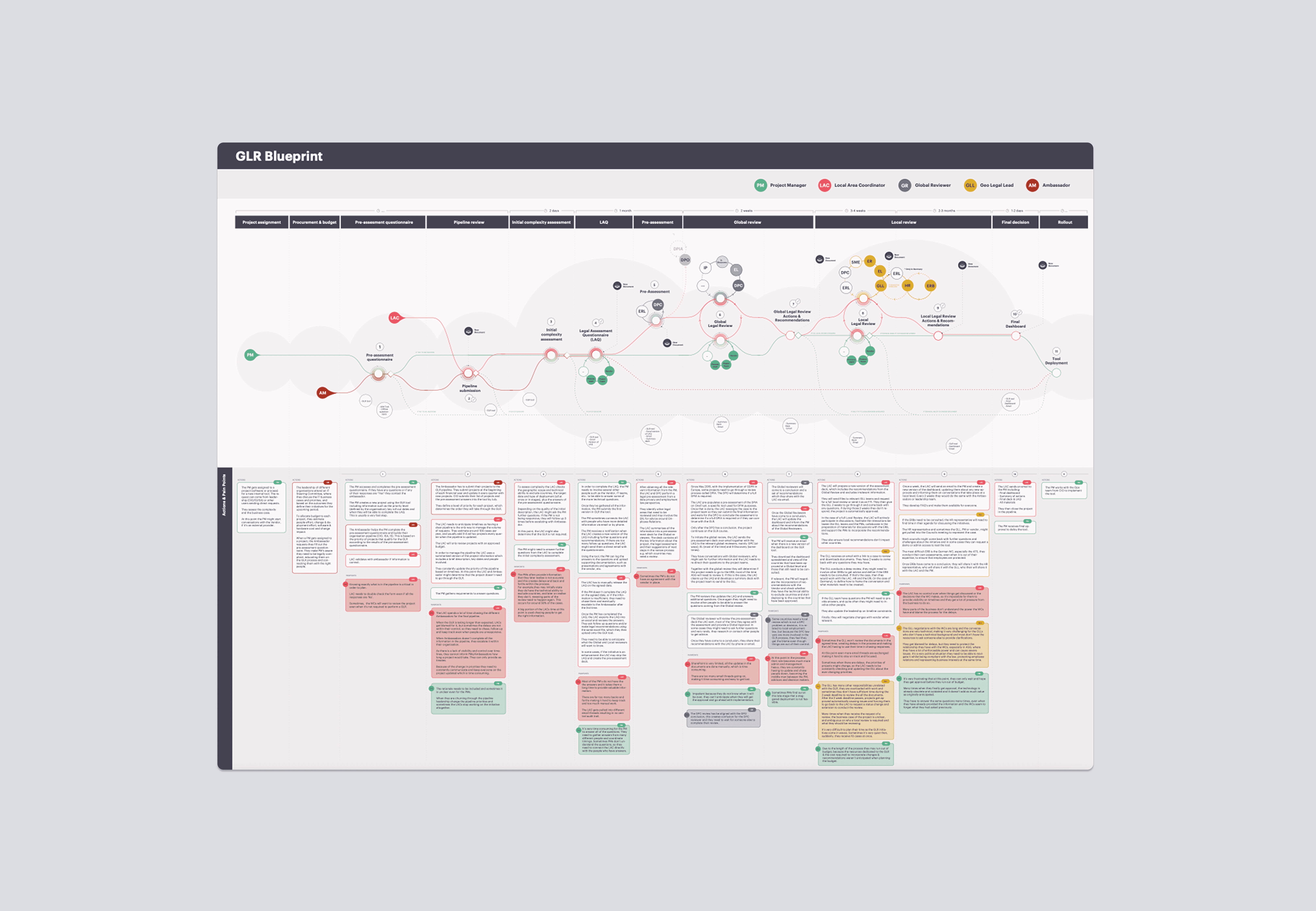
Accenture's Global Legal Review (GLR) was a years-long approval process for new tools and technologies—ensuring compliance with international data privacy laws. Two user groups were stuck in the middle:
Project Managers (PMs): Non-lawyers completing a 200+ question legal questionnaire they didn't understand
Legal Assessment Coordinators (LACs): Lawyers reviewing cases, constantly chasing incomplete information
The process was fragmented across email, SharePoint, and Excel. PMs couldn't track progress. LACs wasted time on back-and-forth. Cases took years to close.
My Role
Content & UX Designer leading the questionnaire redesign—owning content strategy, information architecture, interaction design, and developer collaboration.
Research
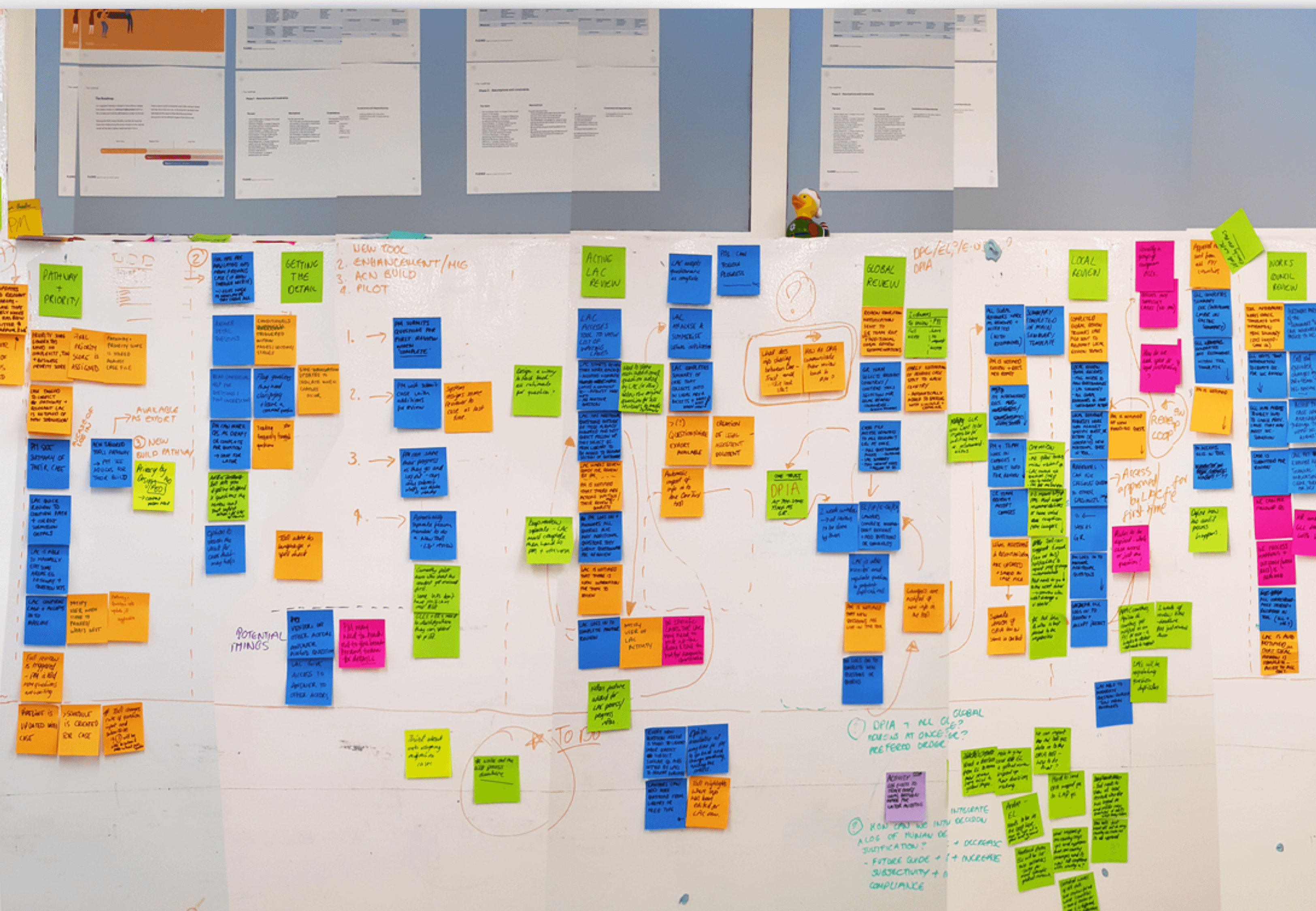
Stakeholder interviews: Surveyed and interviewed PMs and LACs to understand both perspectives
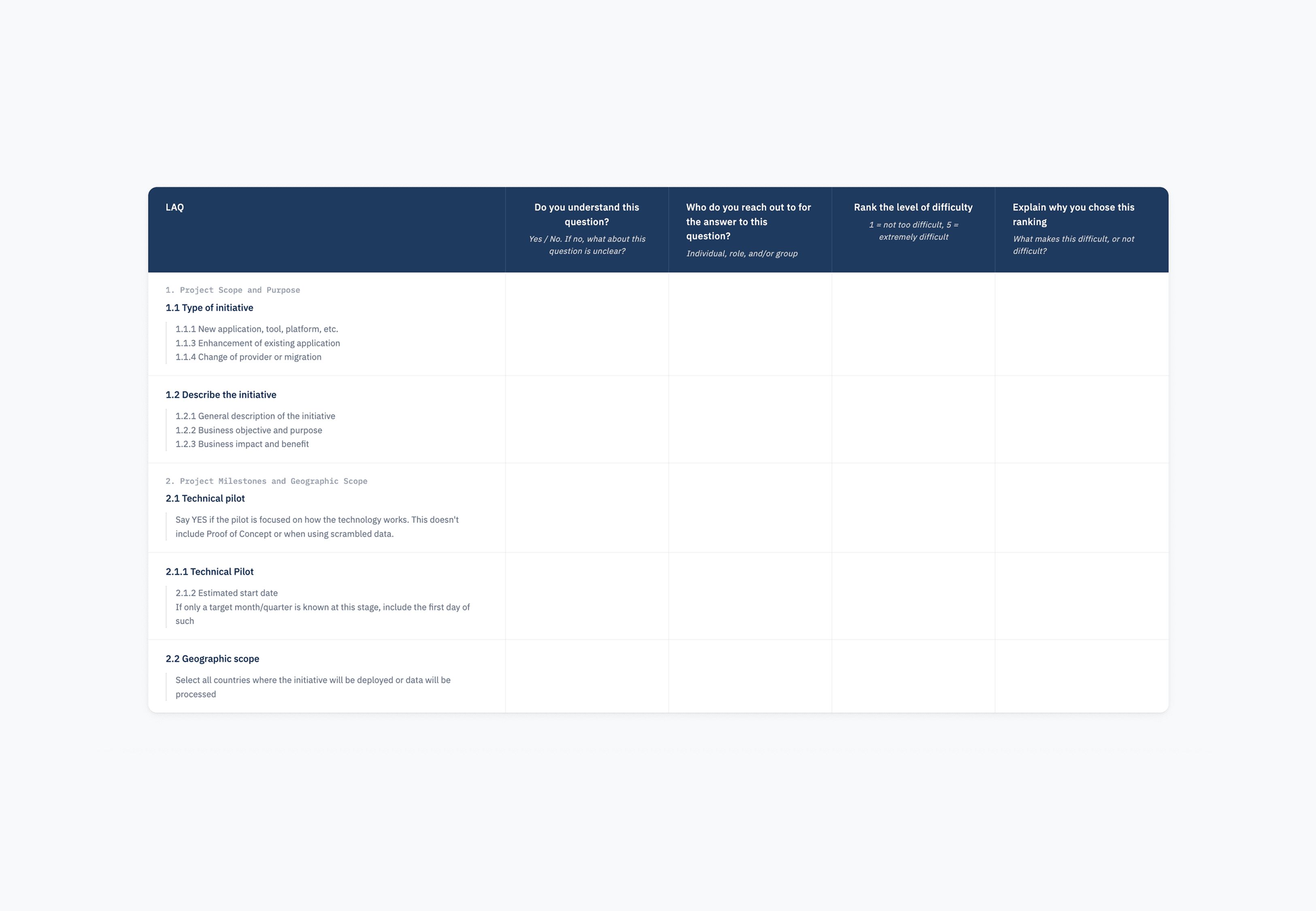
Question mapping: Mapped question-to-law relationships and ranked questions by legal significance; worked with LACs to map every question's legal significance—informing what to simplify, cut, or restructure
Pain point analysis: Identified where users got stuck and where LACs spent the most time
Key insight: PMs needed simpler language and clear progress tracking. LACs needed complete information and review checkpoints at key stages.
Content Design
Consolidation: Cut questionnaire length by 50% through consolidation and conditional logic
Plain language: Rewrote legal jargon in plain language (validated by LACs for accuracy)
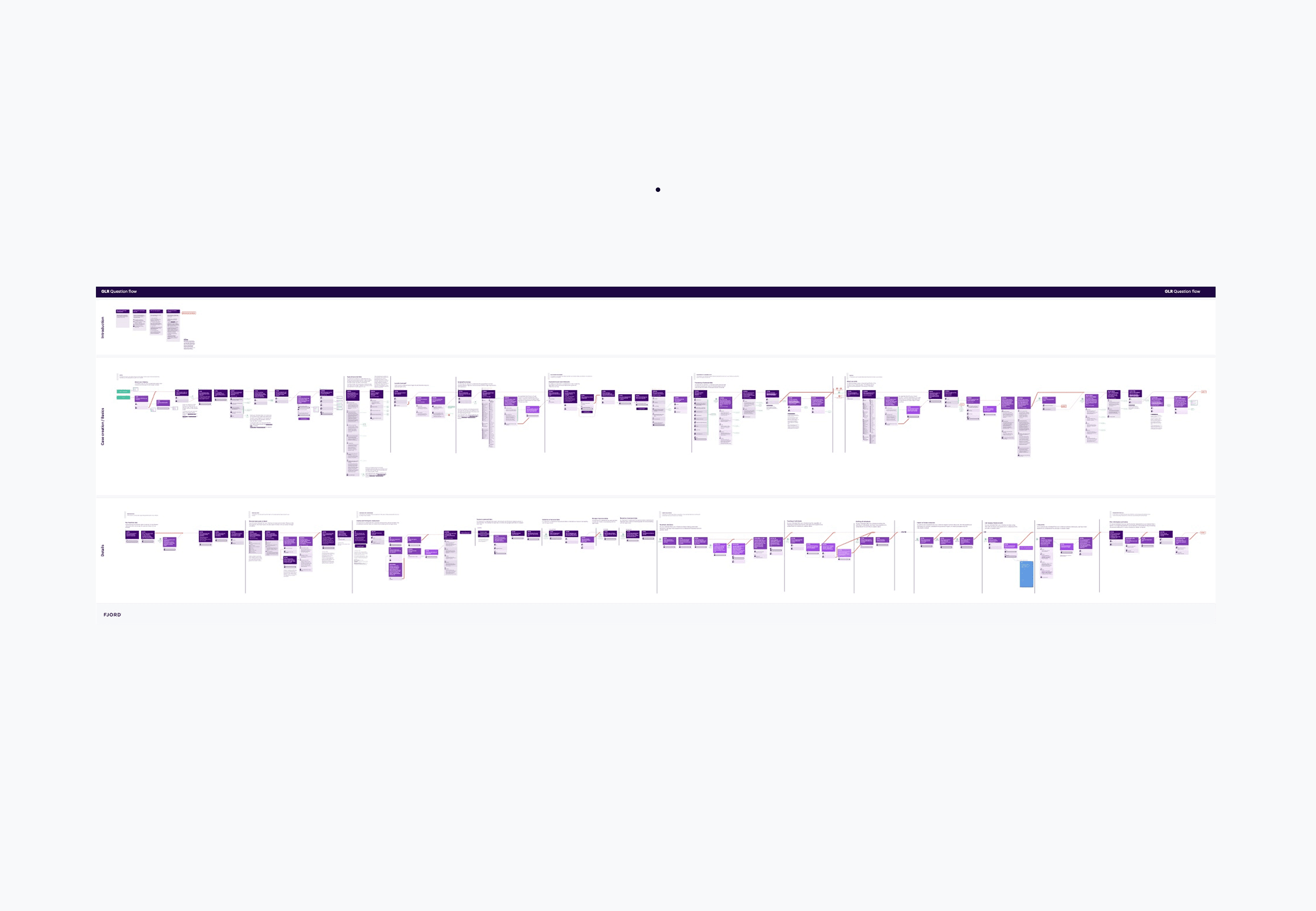
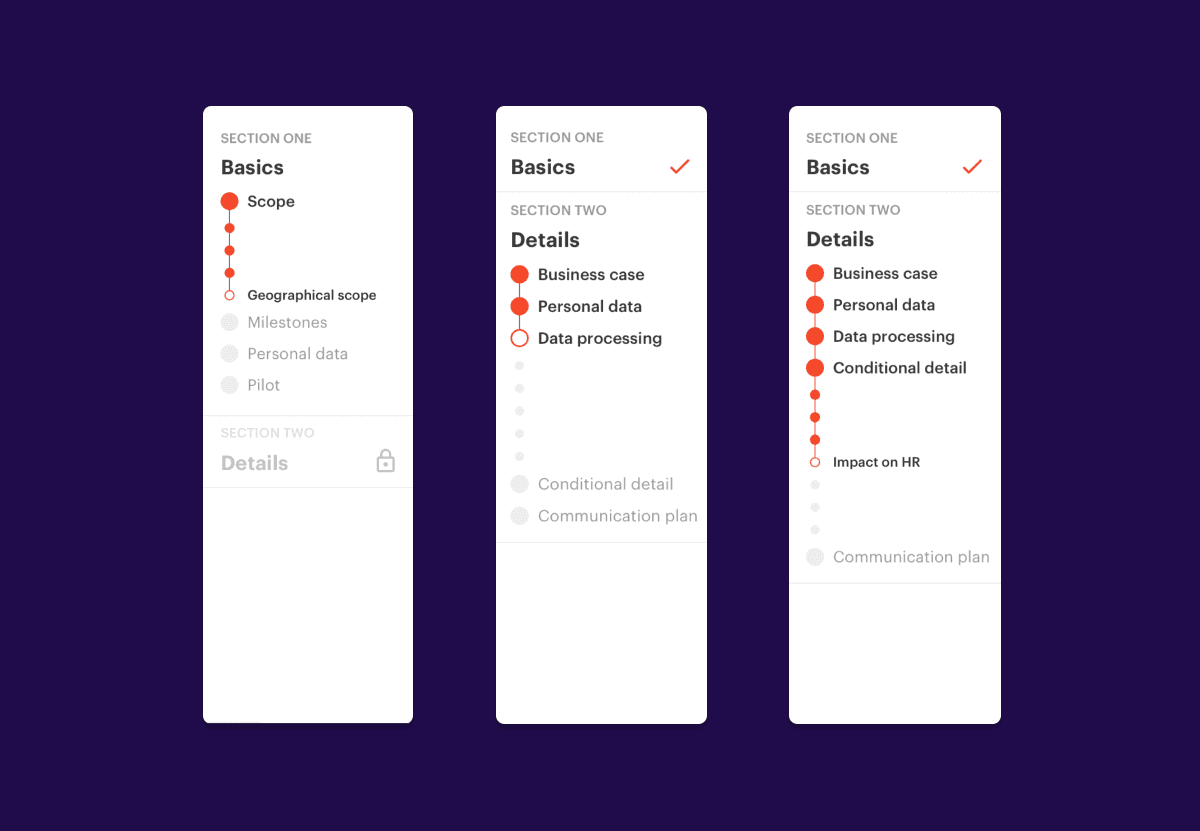
Information architecture: Restructured into 2 sections, 9 sub-sections, 21 pages
Interaction Design
Skip flow: PMs wanted to skip questions they couldn't answer, but LACs couldn't process incomplete submissions. Designed a temporary skip with visual indicators, requiring completion before final submission.
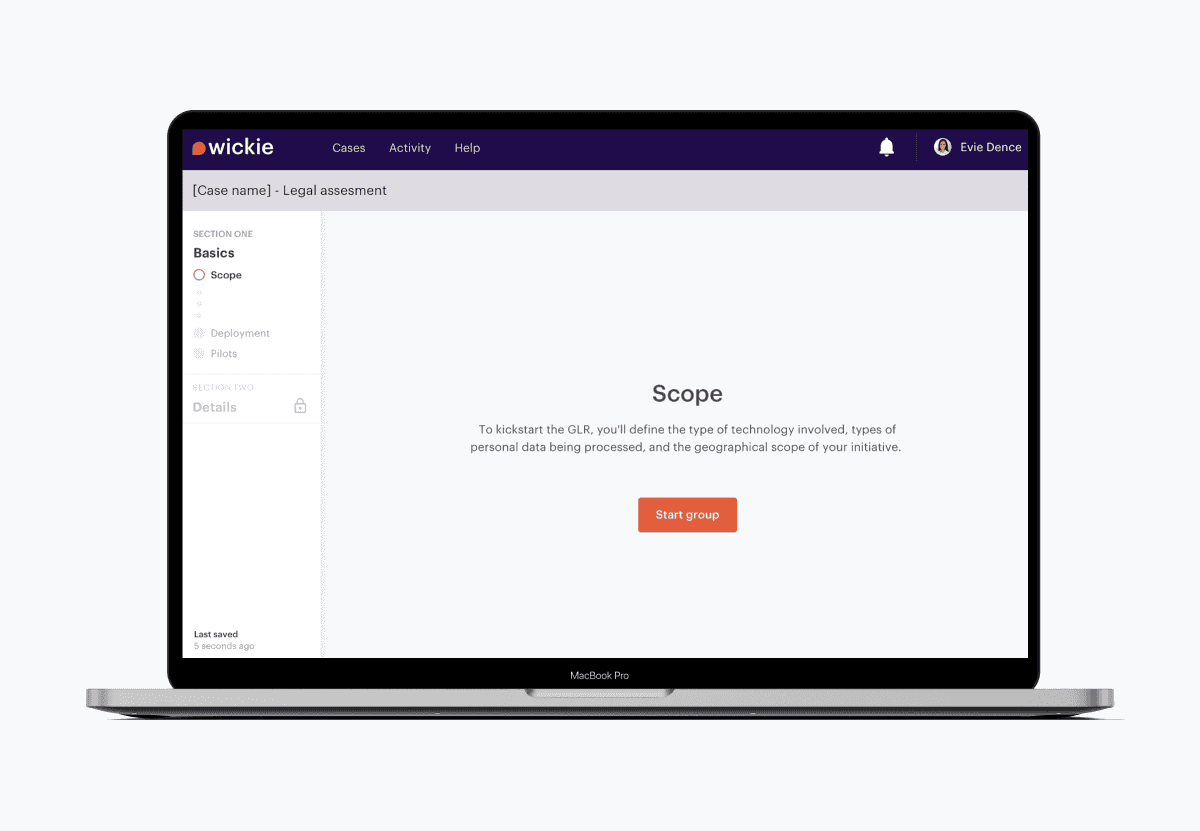
Review checkpoints: Automated logic couldn't catch every legal edge case. Created section-based review gates with lock icons signaling "waiting on review."
Conditional logic: Follow-up questions created unpredictable paths. Tested three approaches—landed on inline placement below the parent question to maintain context.
Solution
A restructured questionnaire with intuitive navigation, plain-language questions, conditional logic, and built-in review gates—reducing complexity for PMs while preserving legal rigor for LACs.
Impact
65% reduction in time to approve cases
30% increase in first-attempt approval rate
50% reduction in questionnaire length
Clicks per question reduced from 30 to 1–3