Multi-Home Management for AI Platform
Reimagining the smart home experience to support property-based organization
Role
UX Designer
Industry
Smart Home AI / Voice Assistant
Duration
6+ months
Problem/Opportunity
Through user research and competitive analysis, we discovered that a significant portion of our smart home customers owned multiple properties—vacation homes, rental units, or homes where they cared for aging family members. However, our platform treated all devices as belonging to a single home, creating frustrating experiences. Commands like "play music everywhere" would inadvertently trigger devices across all properties. Meanwhile, competitors like Google and Apple had already launched optimized multi-home experiences, putting us at a disadvantage.
My Role
UX Designer leading end-to-end design for mobile and multi-modal experiences, collaborating with product management, app experience team, and engineering.
Design
Designing the multi-home experience required rethinking nearly every aspect of the smart home platform:
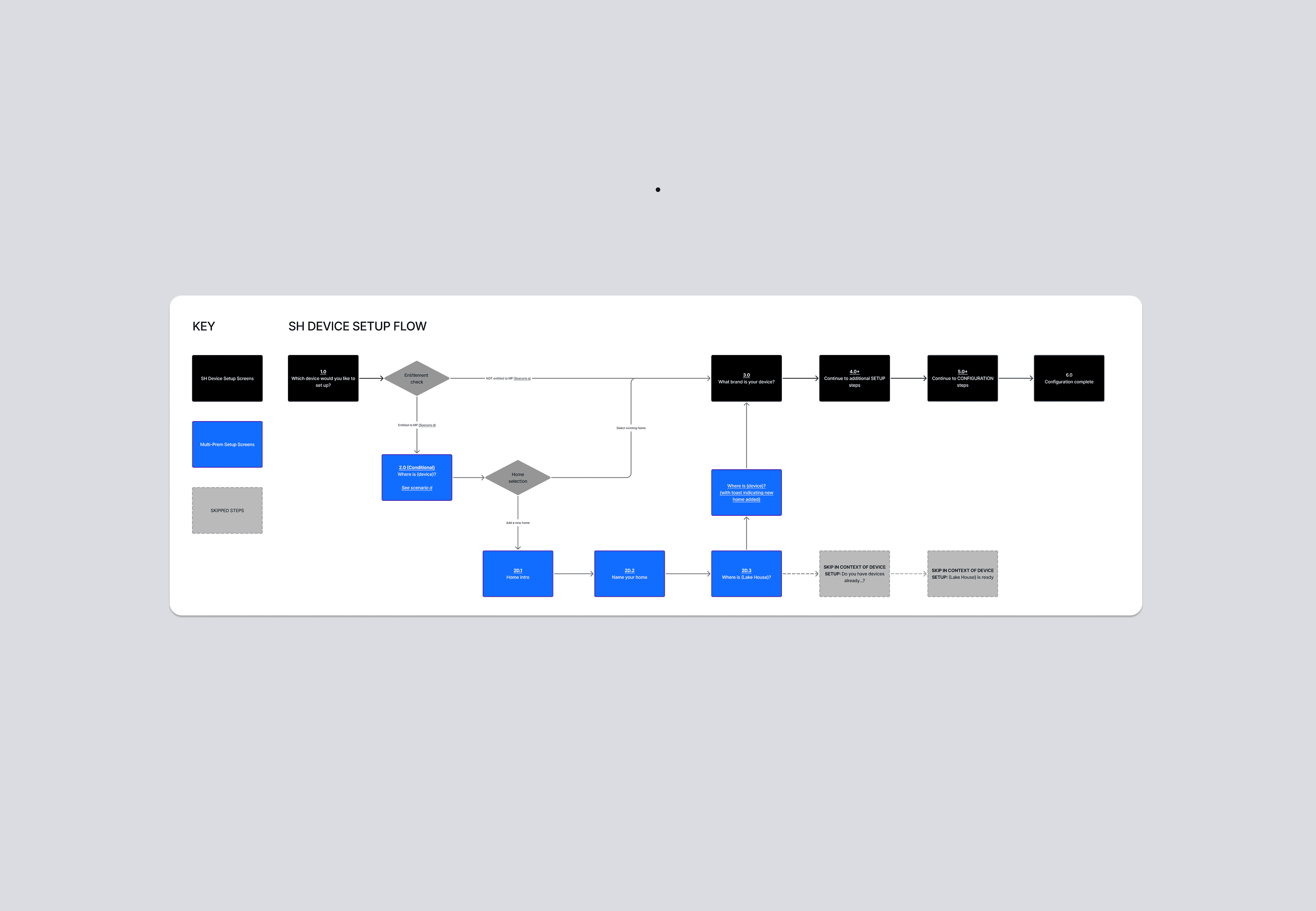
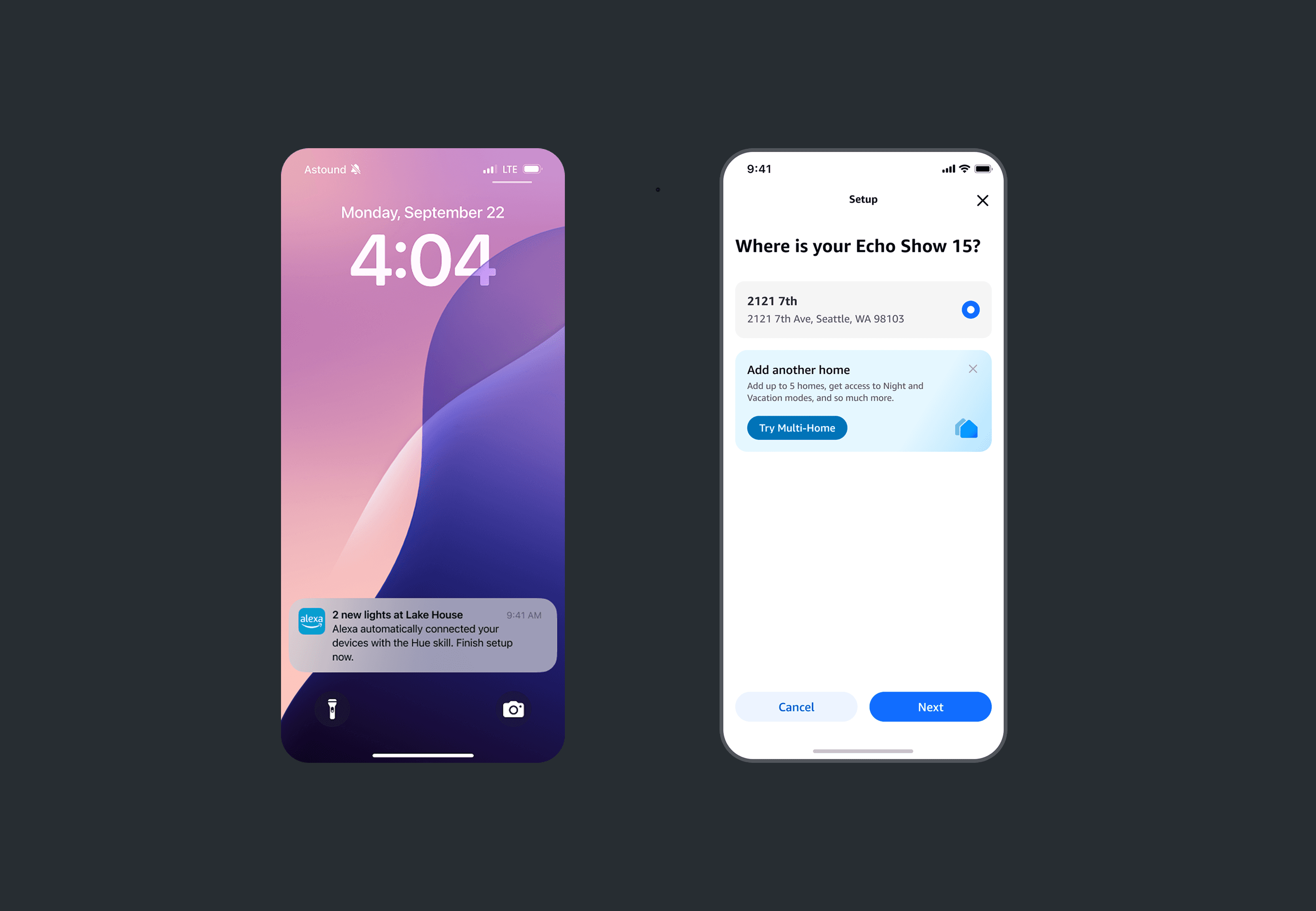
Home creation flow: End-to-end experience for setting up additional homes, including address selection and device migration from existing homes
Subscription & eligibility: Built logic mapping to determine customer experience based on subscription status (required both platform subscription + multi-home add-on), designing each eligibility state
Device setup integration: Redesigned new device setup to include home selection with option to create new homes mid-flow
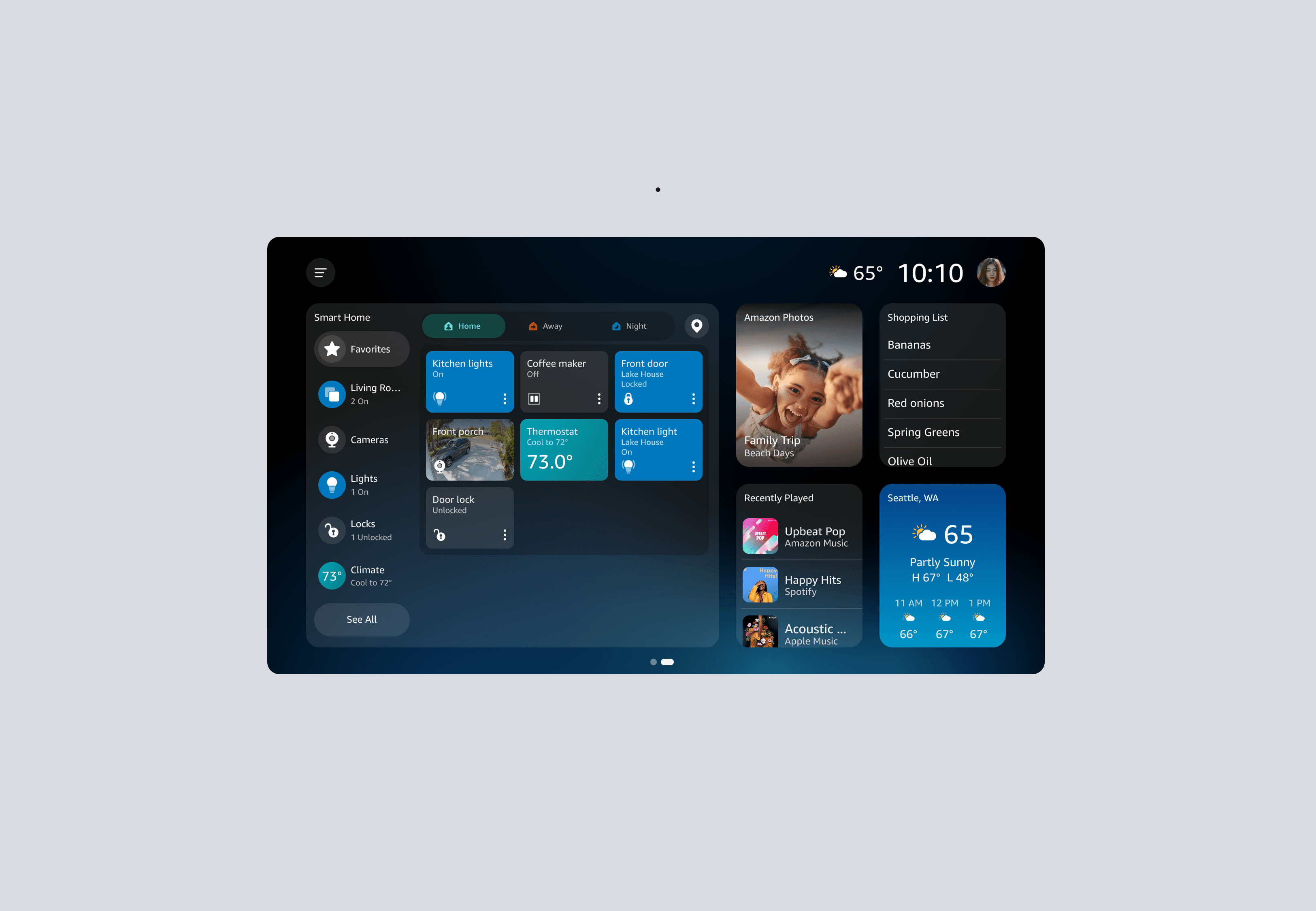
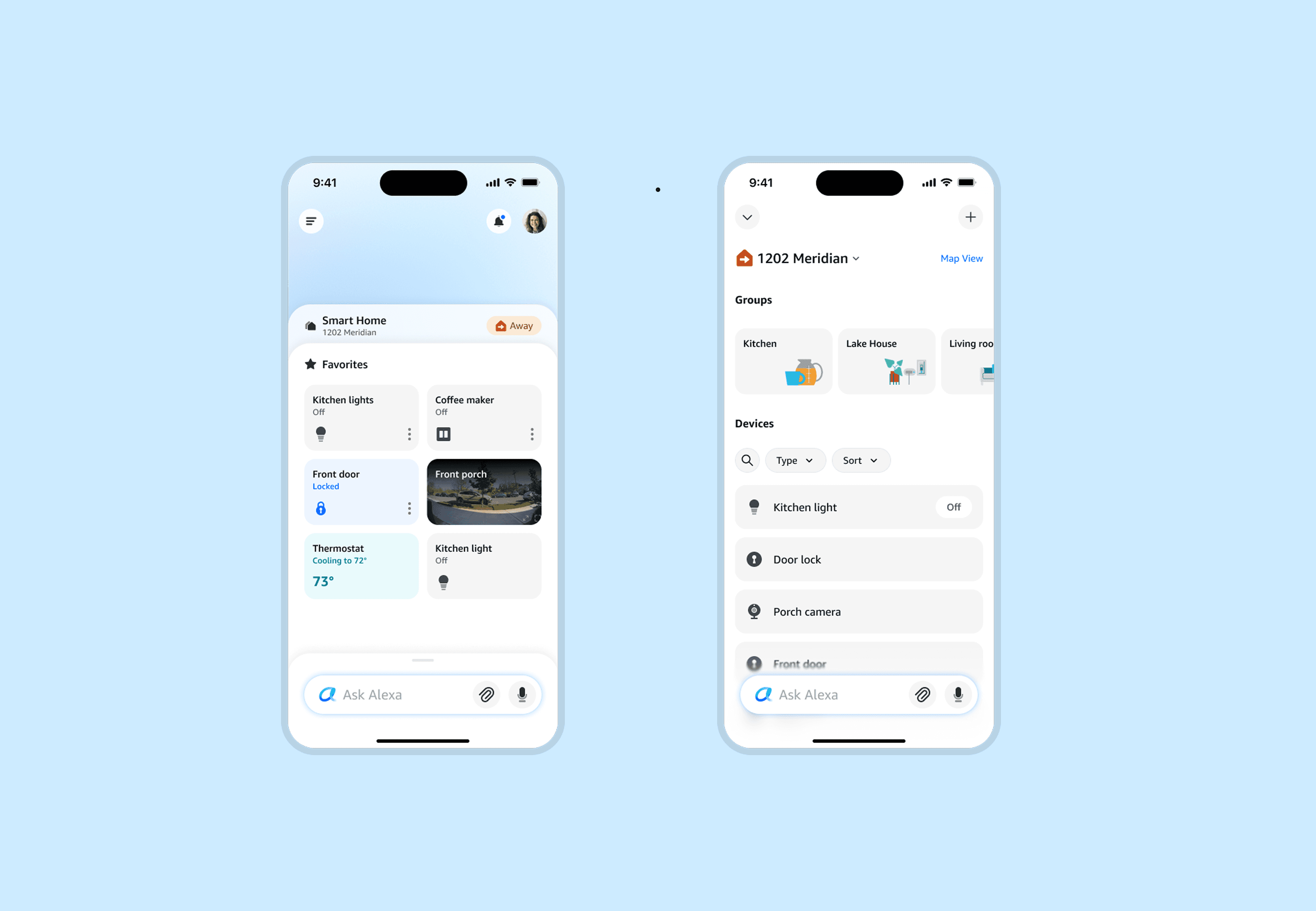
Favorites redesign: Created per-home favorites organization, allowing customers to designate and manage favorite devices separately for each property
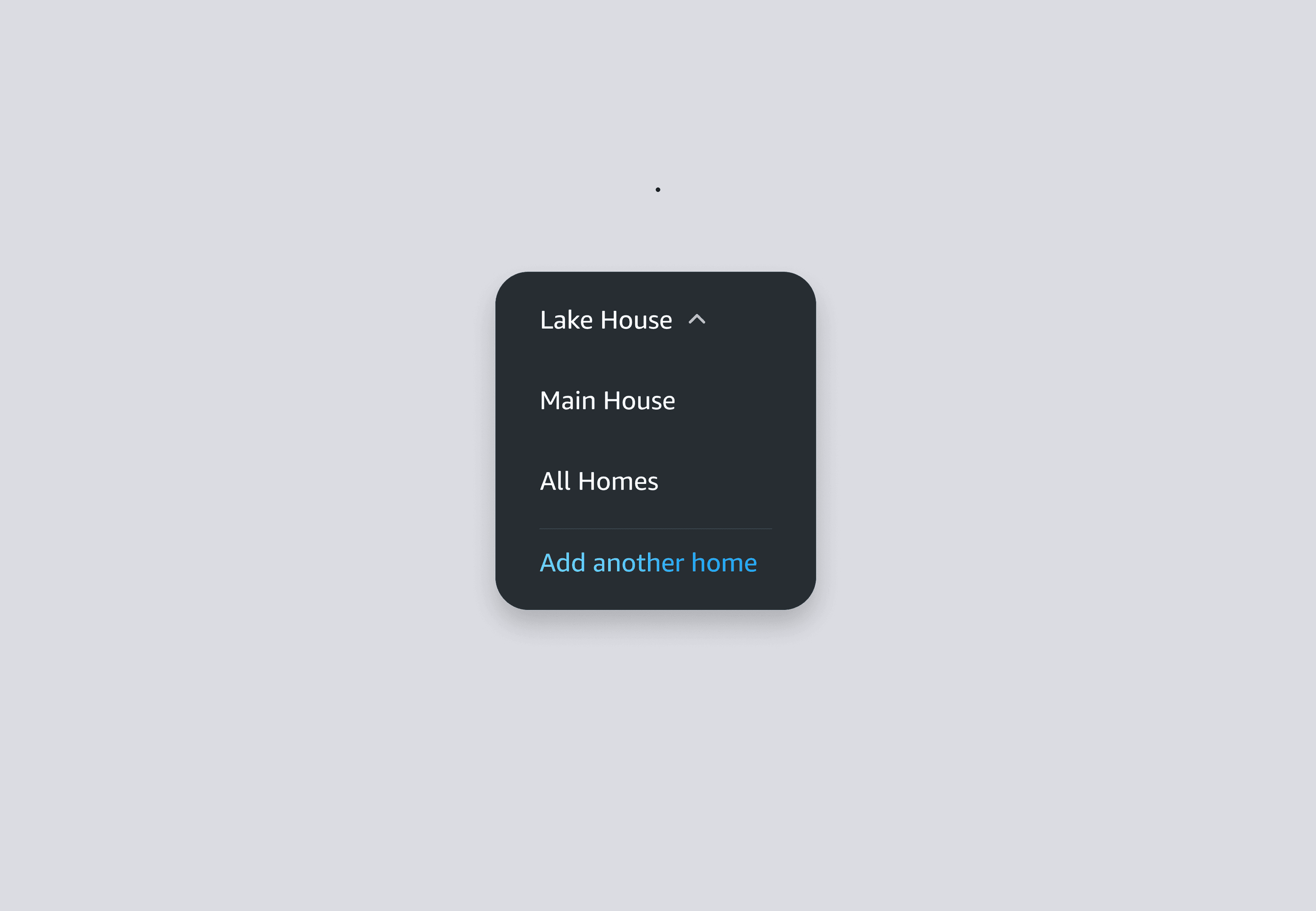
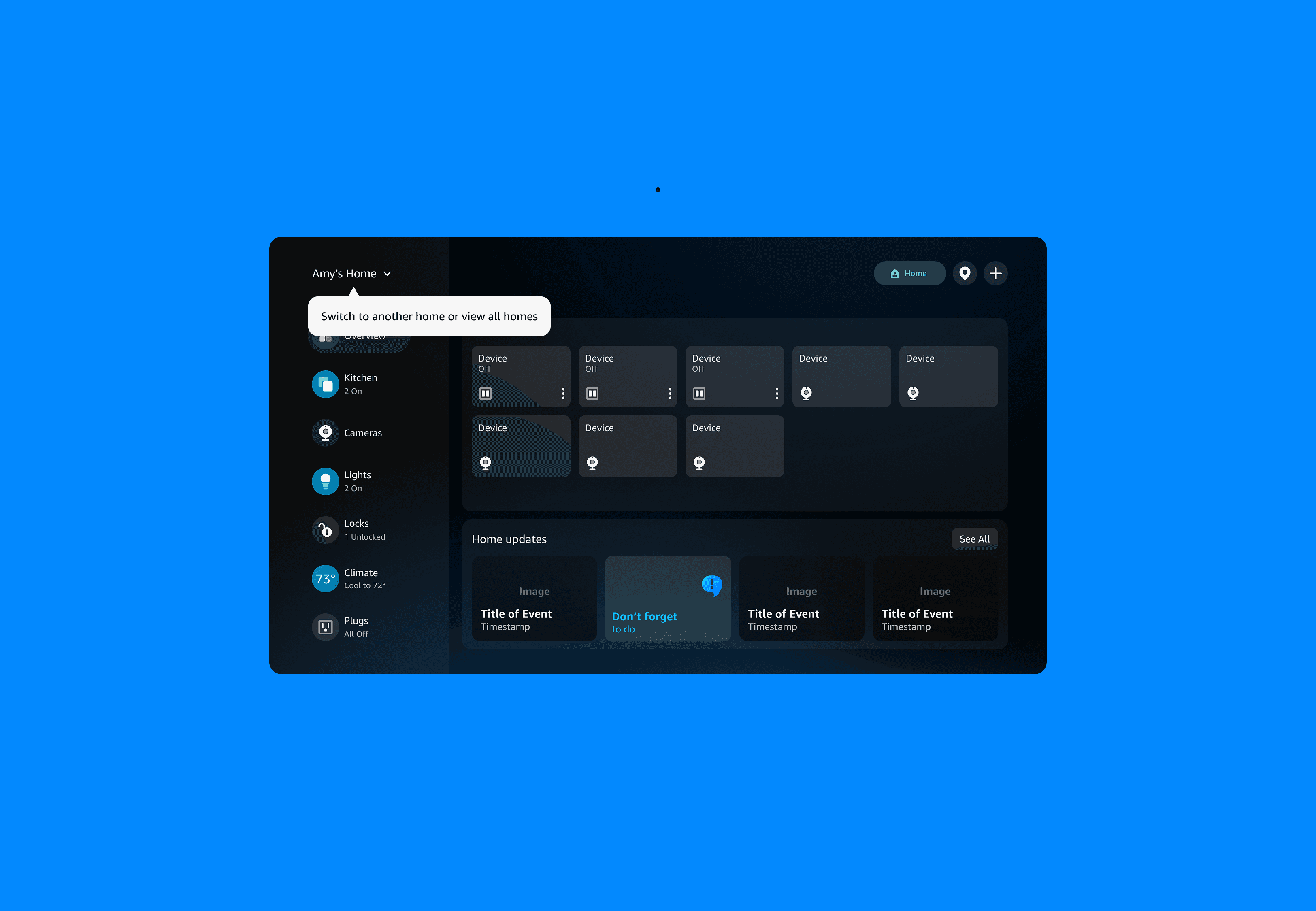
Multi-modal interface: Designed cross-home content views for echo devices, balancing focus on current home while enabling easy switching and customization across properties
App strategy: Consulted with app redesign team to integrate multi-home concept into their roadmap
Iteration
Conducted usability testing which revealed navigation challenges with the initial product vision—users struggled with home switching and understanding content hierarchy. I redesigned to a simpler, more intuitive experience with clear home context and flexible customization, then iterated based on engineering constraints through delivery.
Impact
Generate millions in annual subscription revenue from multi-home add-on
Improve device and group organization, reducing management friction
Increase voice command accuracy for multi-property households
Reduce automation errors by 25% through clearer home contexts